Categories
Sound

GeoBuzz — A Spatial Music and Sound Composition Tool

The listener is the playhead

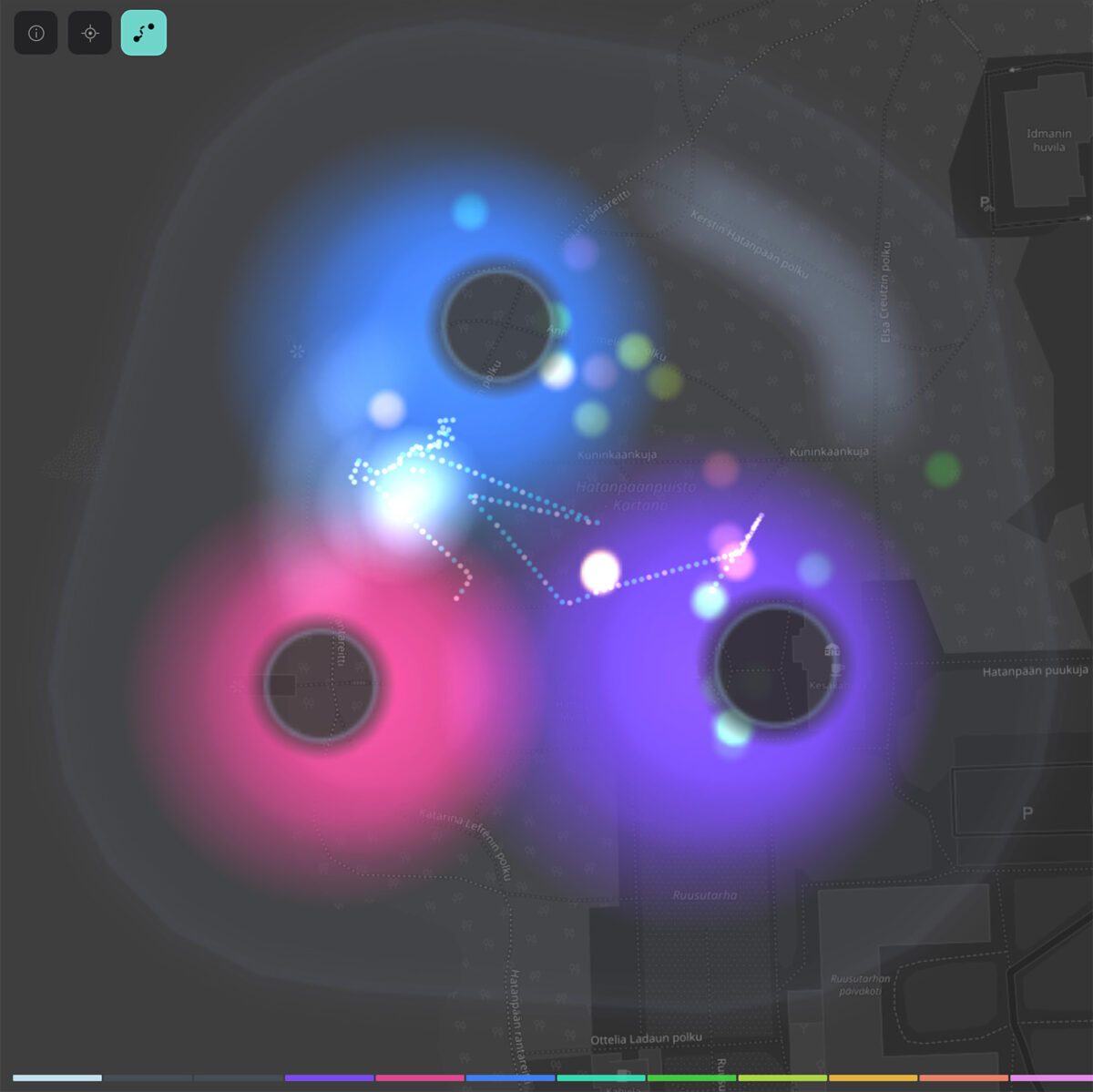
GeoBuzz is an open‑source web tool for creating spatial, walkable music — musical pieces and audio experiences that are shaped by geography and movement rather than by traditional timelines. Instead of arranging notes on a grid, you place sounds, synthesizers, sequencers, and modulation elements directly on a map. As a listener walks through that map, the sounds change based on position, direction, and speed.

At its core, GeoBuzz consists of two parts: the Editor, where you design your soundscape, and a lightweight runtime engine that plays back the composition in a web environment or in an application. You can define control zones, movement paths, automation curves and distance‑based sequencers — all tied to physical space — and export your work as a standalone package for further development.

Spatial music like this builds on ideas from electroacoustic and location‑based sound practice, where the position and movement of sound sources in physical or virtual space become part of the composition itself. This is related to the broader concept of spatial music, where sound localization and placement are intentional compositional tools.

Using GeoBuzz doesn’t require specialized hardware. It runs in modern browsers and takes advantage of geolocation and orientation features when available. The focus is on experimentation: you can test ideas in the editor, simulate movement, and iterate without complex setup.

The tool is developed with open technologies like Tone.js for audio and Leaflet for map handling. Community contributions, examples, and documentation help other creators understand how the system works and how to integrate it into their own projects.

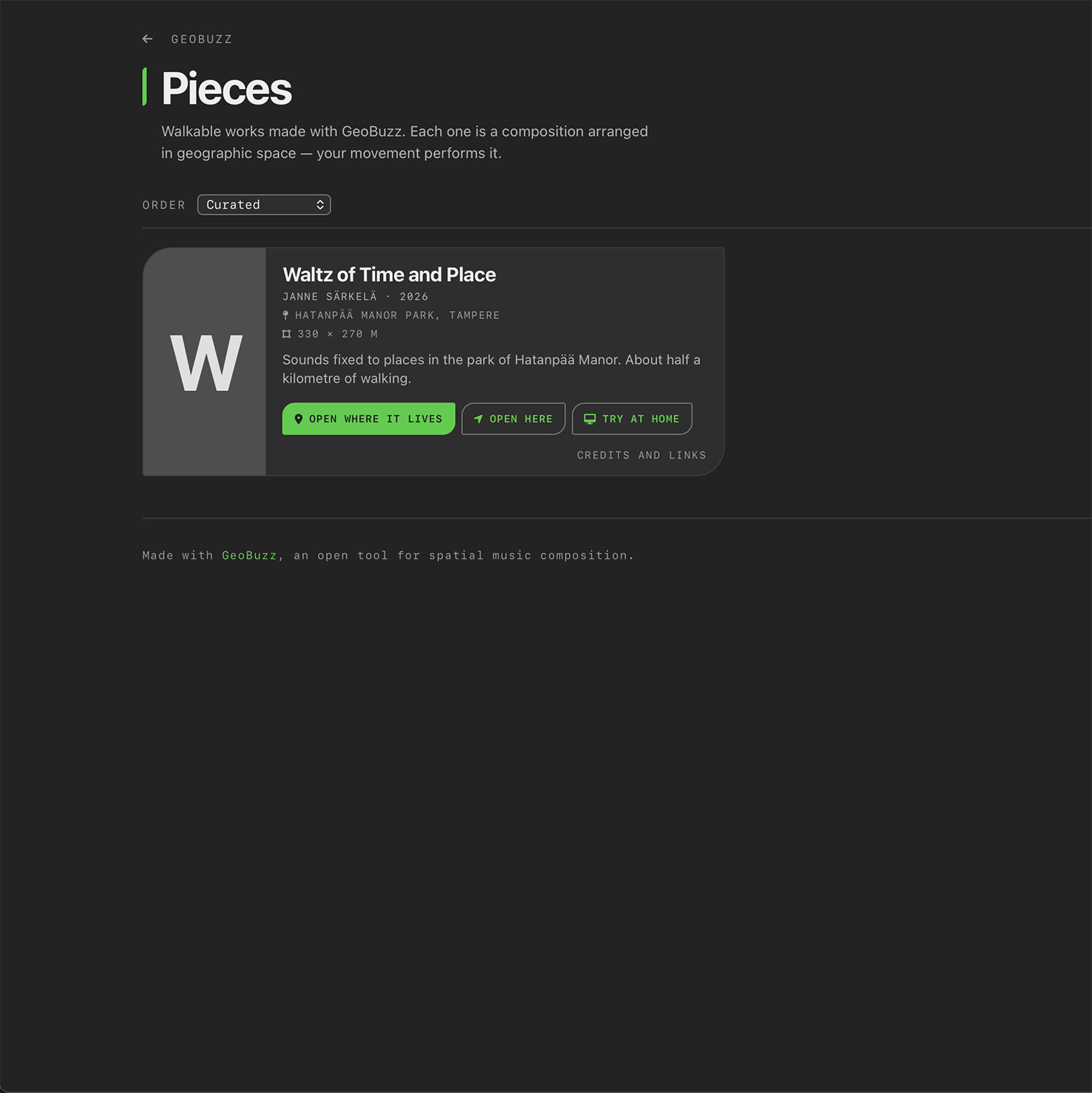
GeoBuzz is not just software — it’s also an invitation to think about music and sound in relation to place and movement. Compositions made with it can be experienced by walking through space or by interacting with the exported audio application in a way that ties listening to environment and motion.

See it in action: github.com/janne-s/GeoBuzz

Categories
Sound

Sound Index: Organize Ableton and Logic Pro Samples

If you’ve been producing for a while, your sample library is probably a mess. Projects scatter the same sounds across folders, and it’s hard to remember which kicks, snares, or loops you’ve actually used and which ones are just wasting disk space.

Sound Index solves that problem. It’s a lightweight macOS tool that scans your Ableton Live set files (.als), Logic Pro (.logic, .logicx) project bundles, and builds a searchable database of every sample reference. Each audio file in Finder gets a comment showing how many projects it appears in and which ones. The original samples aren’t modified – just annotated with metadata you can use.

The result is a practical way to:

  • Audit your sample usage
    Instantly see which sounds are indispensable and which are never touched.

  • Clean your library
    Identify duplicates and unused files without breaking projects.

  • Search efficiently
    Run queries on a real database instead of digging through folders by hand.

Sound Index is a transparent solution built around open formats (Finder comments + SQLite) so you’re not locked in. If you’re tired of losing track of where your sounds live or which projects depend on them, this is a simple but powerful fix.

Read more about Sound Index on Github

Categories
Sound

Creative use of the gate effect: write messages into the waveform

This might be a nifty sound design trick. With the creative use of a gate effect, you can write messages into the amplitude waveform.

At the very least the resulting gate patterns are interesting.

Categories
Art

Visual Interpretation of a Musical Composition

A visualization or music video for Big Reveal (In C) — an experimental choral work by renowned musician, composer, and sound artist Petri Kuljuntausta.

Screenshot of the Magic Music Visuals project

The piece was exhibited MUU Helsinki Contemporary Art Centre in 2024.

Categories
Art

Soundtrack Composition and Production for an Art Exhibition

An excerpt of the soundtrack loop for an exhibition by a Guadeloupean artist Karib.

The piece is largely based on the high-pitched sound of a reverberating cannon shell casing, which acts like a tuning fork after being fired. In this case, its frequency is about 4400 Hz, or slightly below C#, which corresponds to the wavelength of the casing’s diameter or the cannon’s caliber. The sound is played at different octaves/pitches and processed in various ways. It is mixed with the sound of a Tibetan prayer bell and a temporally lengthened and highly processed sound of a creaking door brings along an organic dynamism.